For Indiana University Southeast students looking for help, one message from the Mental Health Resource Fair was clear: Students do not have to wait until they are struggling to ask for support.
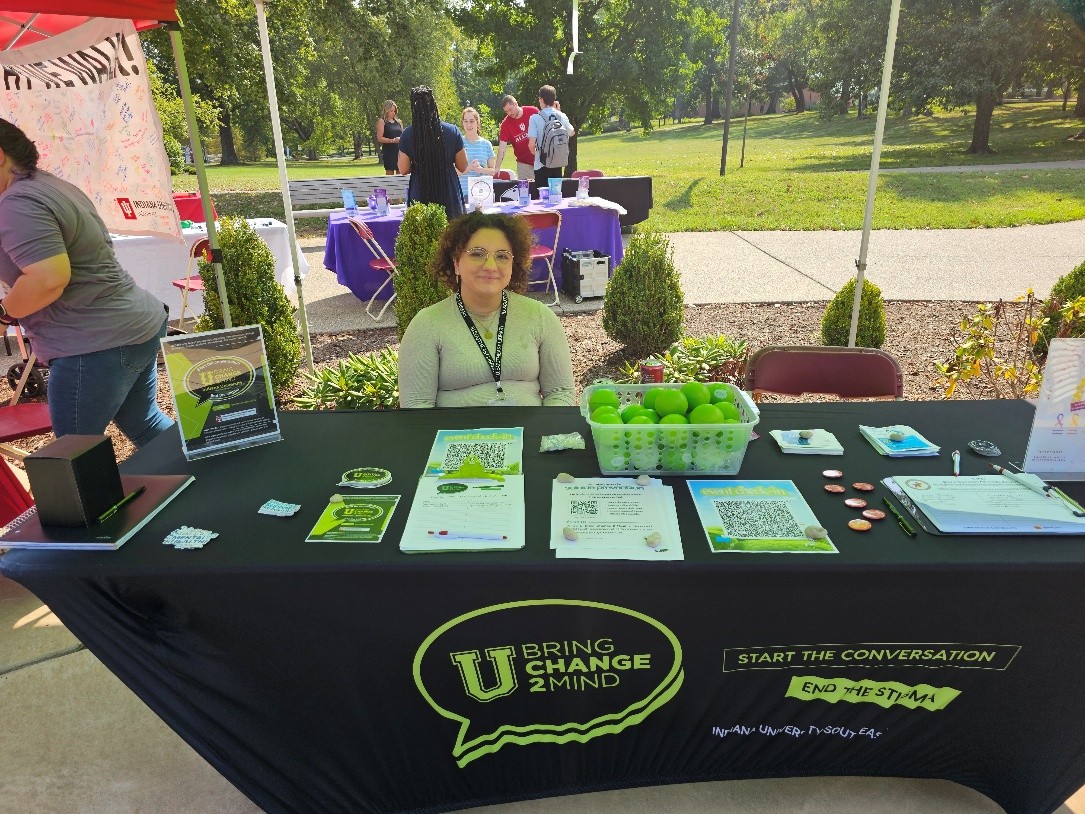
The fair was held Thursday, Sept. 17, at McCullough Plaza near the Clocktower from 10 a.m. to 1 p.m. Eight tables were set up with information from campus and community organizations. Students could stop by the tables to learn about resources related to mental health, food, housing, transportation, academic assistance, and other needs.
Salem Melchor, student leader with U Bring Change 2 Mind, organized the event to help students learn about resources that they may not know are available. They said one reason for organizing the fair was that students may not realize how many free resources are available to them. “I feel like we have a lot of community resources that students aren’t always knowledgeable of,” Melchor stated.
They also said some students may also assume they have to pay for services. U Bring Change 2 Mind provides mental health resources, education, and events focused on reducing the stigma surrounding mental health. The organization’s services are free for students.
The fair hosted several organizations that provide different types of support. Counseling and Psychological Services, also known as CAPS, offers counseling, psychological evaluations and resource navigation. Resource navigation can help students find assistance with transportation, housing, health care and insurance.
Danielle White, resource navigator for student well-being with CAPS, said students do not have to meet a certain standard before asking for help. “There is nothing that they have to do or prove in order to access services,” White said. CAPS is designed to be barrier-free. Students can walk in, call, or email the organization when they need assistance. CAPS also operates the South Eats Food Pantry, which provides free food and hygiene products to students. White said there is no limit to how often students can use the pantry or how much they can take.
Food insecurity is one of several needs White sees among IUS students. She also pointed to transportation, housing, and financial assistance as major concerns. Transportation can be especially difficult for students who do not have a car or driver’s license in an area with little to no public transportation options. White said a lack of transportation can make it harder for students to get to work, attend health appointments, or even pick up prescriptions.
The fair also included Student Life, Childplace Family Services, and the Office of Accessible Educational Services. Accessible Educational Services helps students who had accommodations such as a 504 plan or IEP in high school. Childplace Family Services has been operating in southern Indian for 60 years, providing services for children and adults, including counseling, foster care, private adoption, and home-based case management.
Olivia Wilson, who works with Student Life, said students sometimes think the organization is mainly responsible for putting on campus events. “We’re not just here for the free stuff and events,” Wilson said. “We’re here to actually help you.” Wilson said Student Life can help answer questions and connect students with the information they need. The Student Life office is located in University Center, room 010.
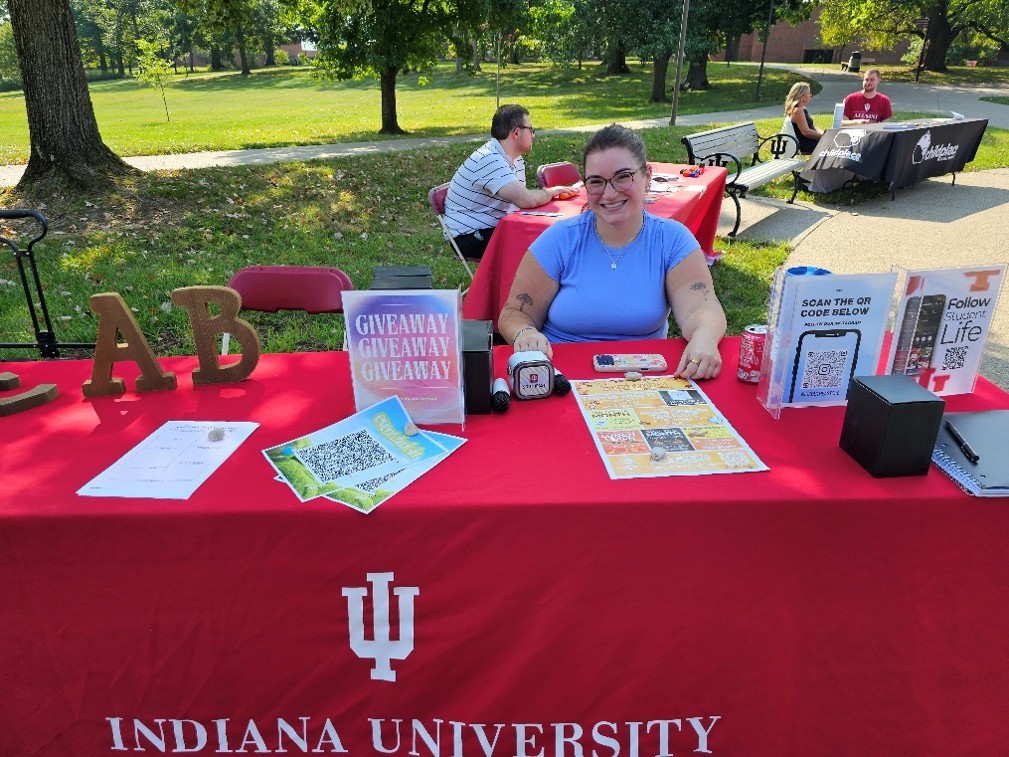
The fair did not include speakers or presentations. Instead, students could walk around the outdoor tables and speak directly with representatives from the different organizations. One of the more unusual offerings at the fair came from Student Life, which had a free karaoke machine available. While it was a fun addition to the event, the tables also gave students an opportunity to learn about more serious resources available to them.
For White, the larger message of the event is that students should not be afraid to reach out. “We offer these services for a reason, and we want students to access the services. We want them to reach out,” White said. “Seeking help is a strength, not a weakness.”
The resource fair showed that asking for help does not have to mean a student has reached a crisis. Whether someone needs counseling, food, help finding housing, or simply an answer to a question, IUS has organizations available to help students find the support they need.
Zachary Cunningham is a student in JOUR-J303 Online Journalism and is a contributing writer to The Horizon