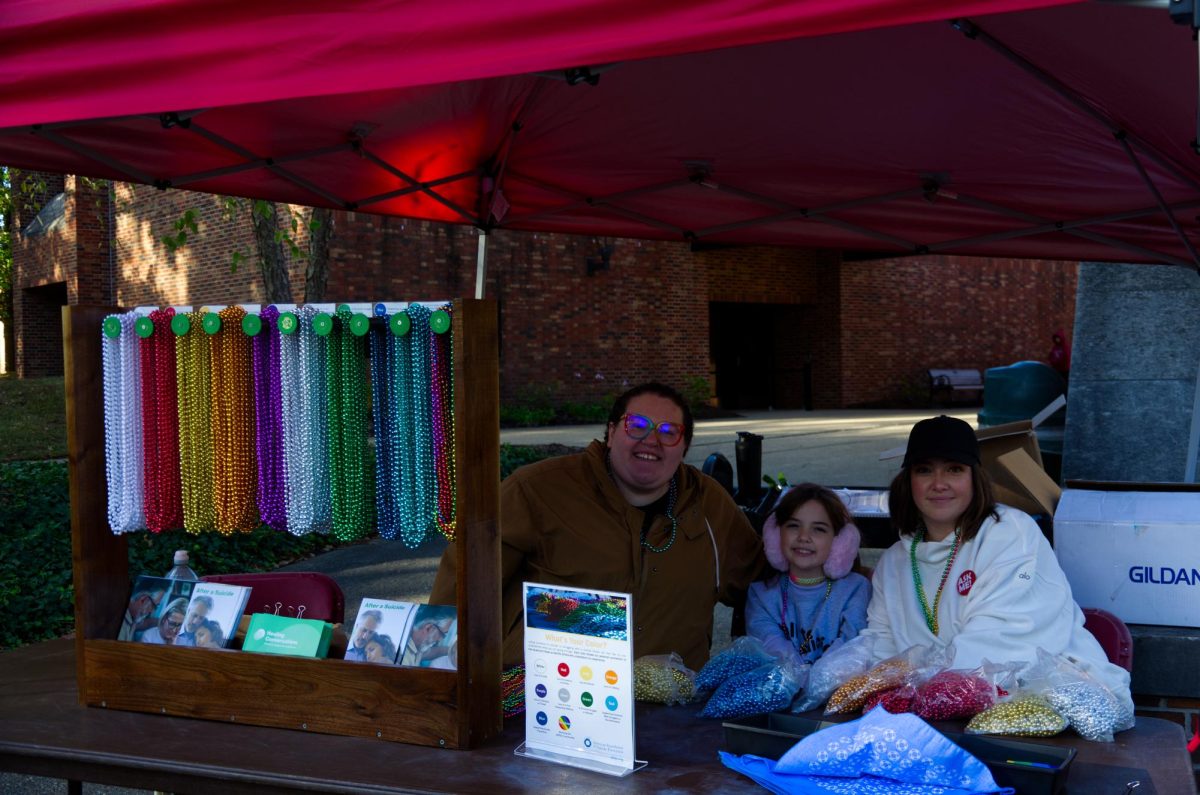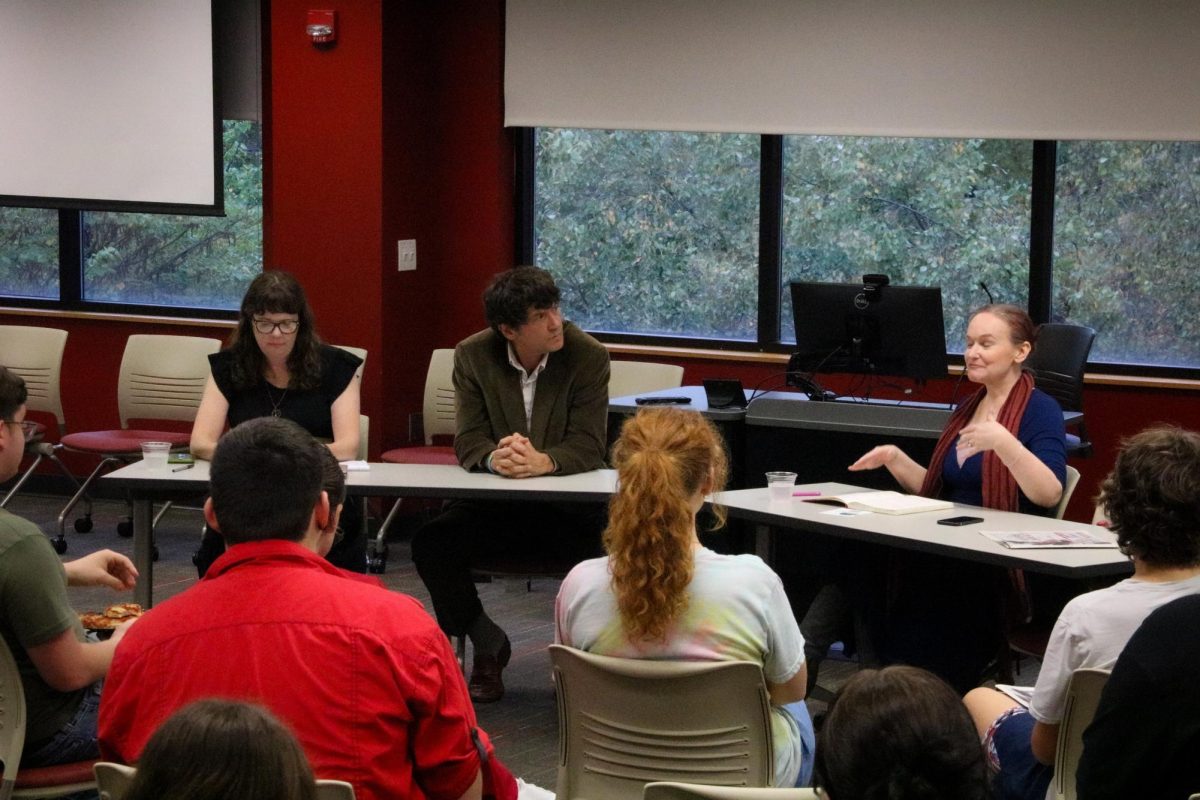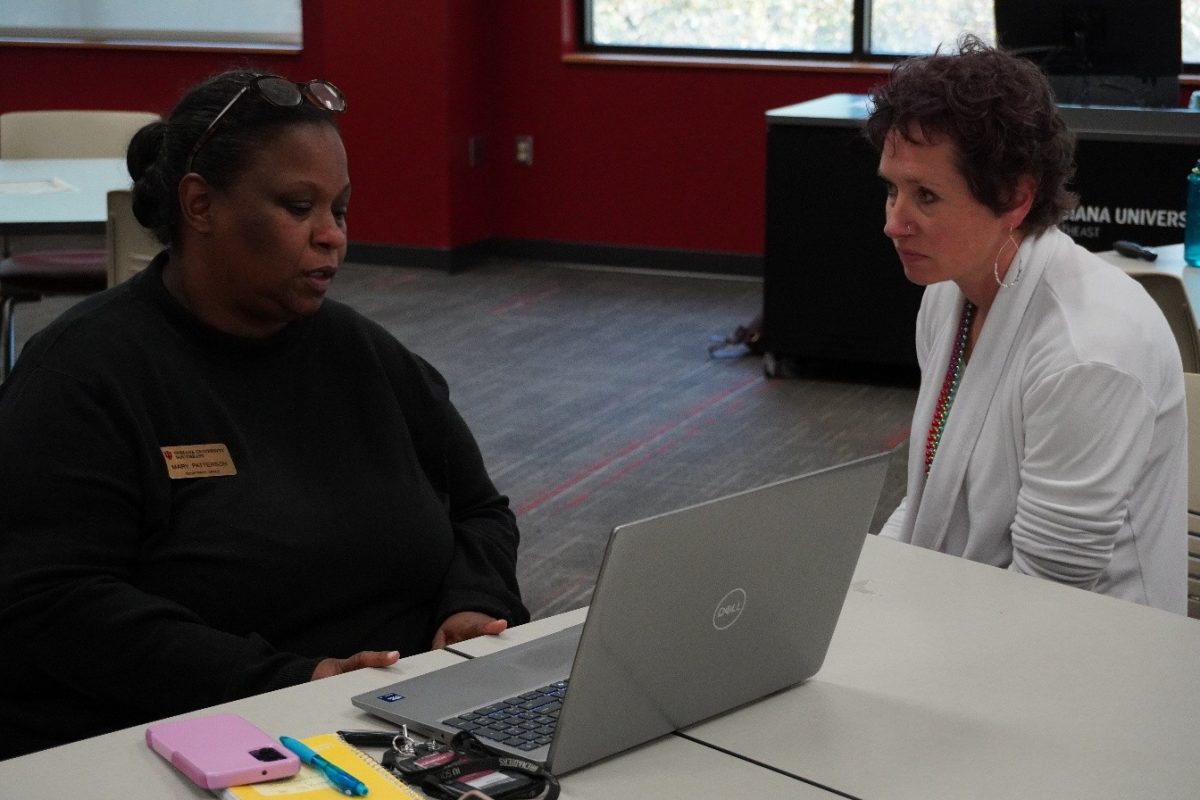
Indiana University Southeast hosted Stefanie Krievins on Friday Oct. 30 for Circle of Care, a caregiving summit dedicated to supporting those who provide care in any capacity. Krievins is an experienced strategist with The Change Architects, a coaching and consulting firm focused on turning leaders into changemakers who can grow their companies. Krievins, an alum of Indiana University, presented on caregiving, burnout and compassion fatigue.
Krievins began her presentation with the question, “who counts as a caregiver?” She explained that caregivers are individuals who take care of another person. This could happen at home while caring for a parent, a child or a child with special needs. Caregiving can also involve caring for a friend, sibling, partner or spouse with an illness, or even a neighbor. They are anyone who supports someone, whether it be age, disability, or mental illness.
Krievins shared statistics highlighting the global experience of caregiving. According to a report by American Association of Retired Persons (AARP) and the National Alliance for Caregiving, approximately 63 million Americans are family caregivers, representing more than one in four adults. Additionally, a United Nations report states that women perform more than 75% of the world’s unpaid care work.
Caregiving can be strenuous, especially when someone is called to care for their own parents. Krievins said, “What we experience in caregiving is a shifting of dynamics, when your mom can’t be your mom, and you start doing mom things, that is a hard psychological experience.” Krievins’ presentation specifically noted three stages of caregiver burnout: caregiver stress, burnout and compassion fatigue. Caregiver stress takes the form of feeling overwhelmed, answering too many demands at once and neglecting one’s own needs. If left unmanaged, it can lead to burnout. Stress can be managed by reducing demands, problem-solving and getting adequate rest. Burnout is exhaustion after long periods of unmanaged stress. It can leave someone feeling “empty” and “detached.” Burnout must be managed through real recovery, not “scrolling on your phone.” It also requires setting boundaries with the person you care for to avoid further exhaustion. Compassion fatigue is the final stage, described as a total depletion from absorbing the suffering of a loved one. It can leave someone feeling numb, on edge and unable to feel for others. Recovering from it requires emotional processing, self-compassion and connection.
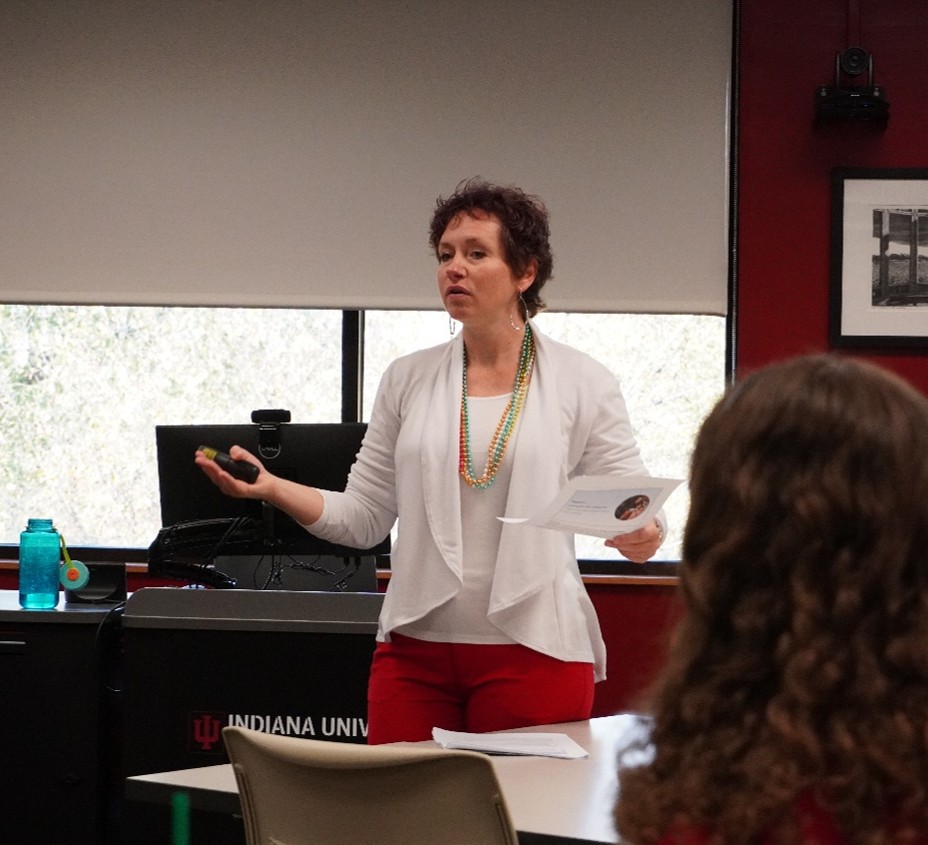
Oct. 30, 2026.
(Blake Gambrel)
Krievins then highlighted the importance of self-care, explaining that it is how caregivers can get “off the train to compassion fatigue” and return to a healthy mindset. Self-care can be seen as reconnecting with oneself. This can mean picking up hobbies or, as Krievins calls them, “grandma habits.” These activities are physical and tangible, slowing people down and helping them reconnect with themselves. Self-care can also mean allowing others to care for you and reaching out to friends when you need a hand.
Self-care involves boundaries. It is important, especially when caregiving for a parent, to keep it collaborative. Krievins said, “We all have our own limitations, and it’s okay to accept our own limitations.” She added that caregivers should not assume all responsibilities,
Krievins also discussed caregiver guilt, explaining how caregivers can feel guilty about taking time for themselves or prioritizing their own needs. However, she emphasized, “In the fullness of time, what will really matter? They won’t remember the times you showered or rested, they’ll remember the time you showed up.”
Wrapping up her presentation, Krievins noted that caregivers do not have to hide their stress, burnout or fatigue. She emphasized the importance of discussing their situations with friends, family and even coworkers so they can receive support while continuing to care for themselves. She concluded by offering a QR code for SupportLinc, an employee assistance program offered through IU that provides access to mental health counseling and referrals 24 hours a day.