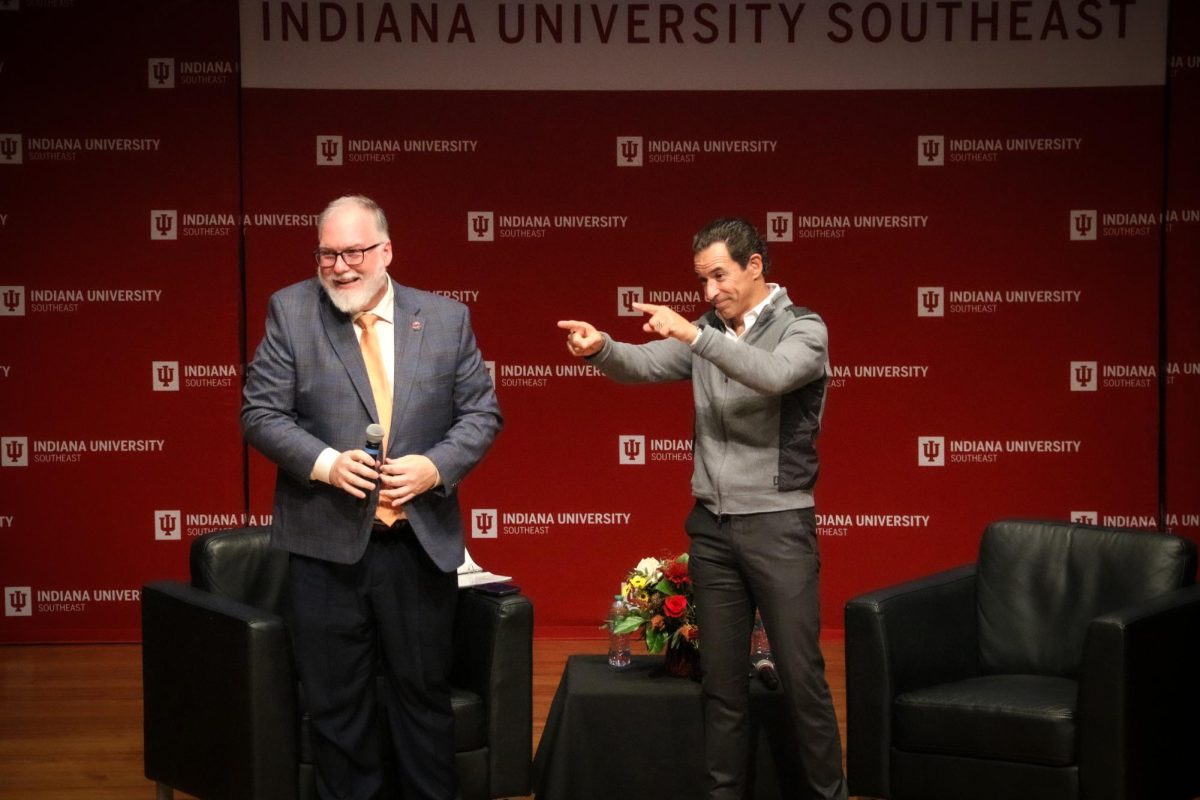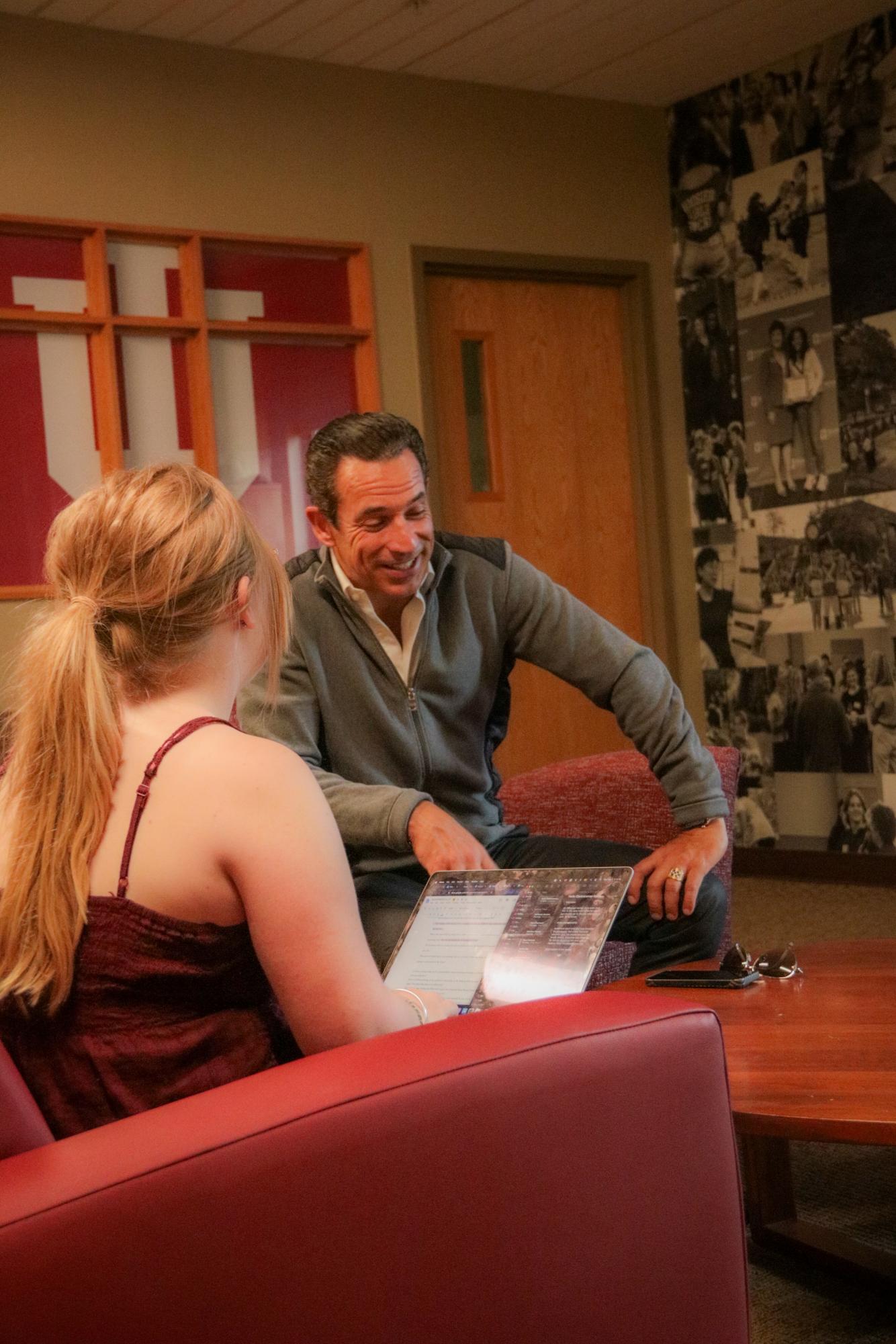
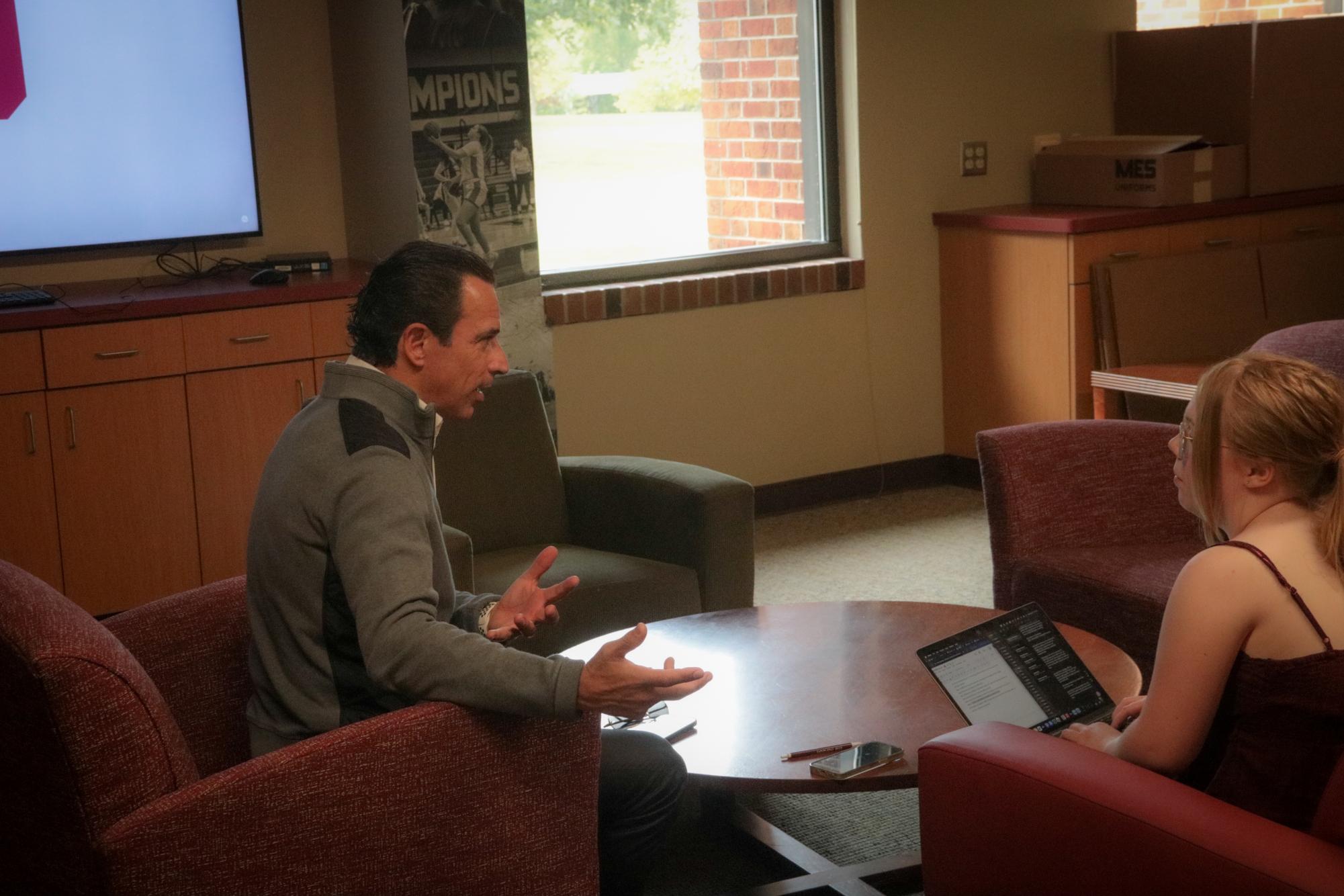
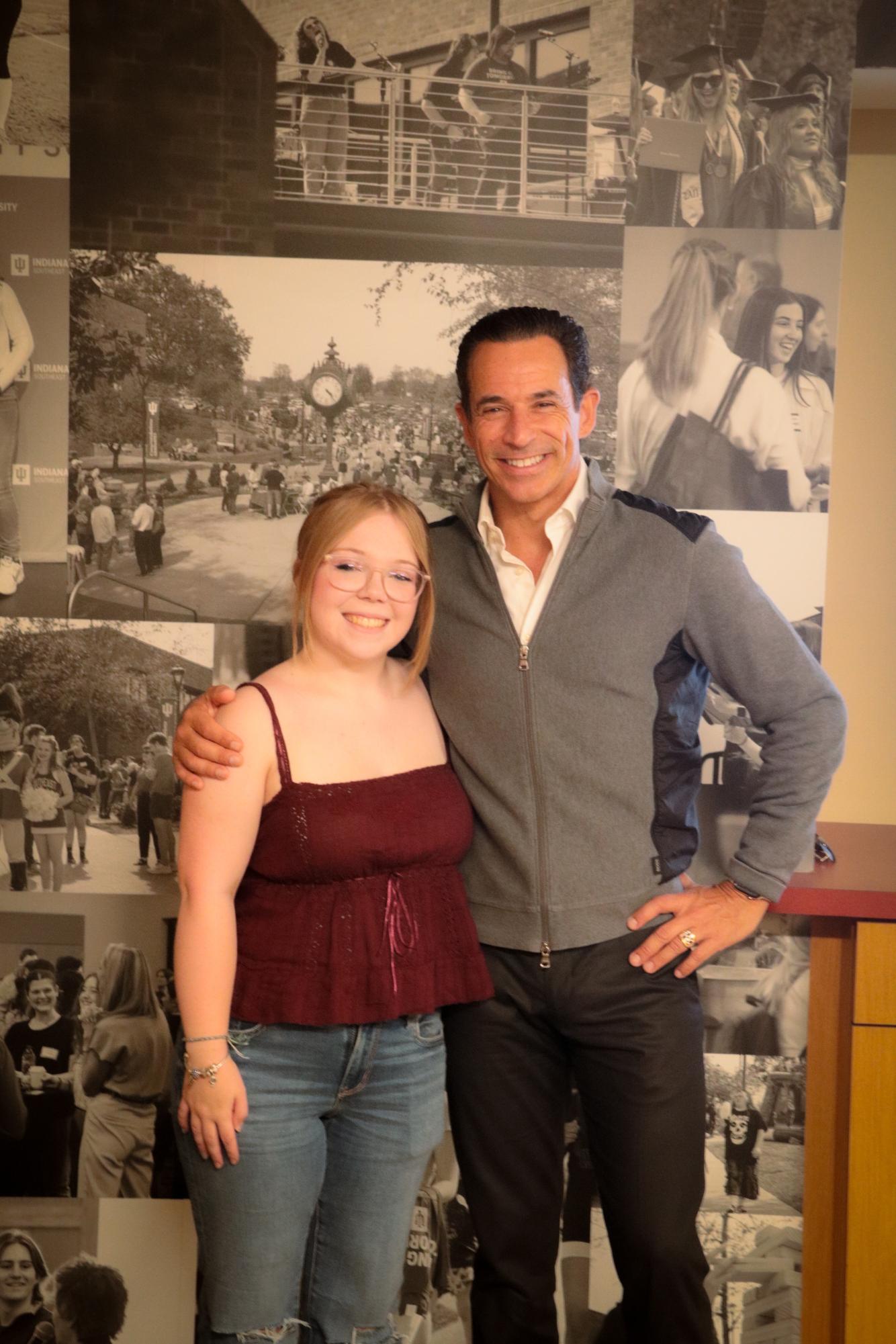
You may know him from the Indianapolis 500 or from Dancing with the Stars, racecar driver Helio Castroneves was recently interviewed by the College of Business, Communication and Technology Interim Dean Michael David Hutchins at the Ogle Center as part of the Sanders Speaker Series. Prior to the event, Castroneves was also interviewed by a Horizon news reporter. He answered questions pertaining to his racing and how he got started, his book, his tv career, and what advice he has for college students.
“Well, the inspiration came from a little bit of the influence of my dad. He used to have a race team down there, a stock car team, not like here in Nascar,” said Castroneves.
Throughout the interview he also discusses memories pertaining to racing, such as his dad sneaking him into the pit at the track when he was a kid, and later being gifted a go-kart. “I’m not sure if it was my dad, one of the drivers ended up giving me a go-kart, and from there on, going to places around Brazil, but not very sophisticated, just playing around,” he
said. Speaking of his Dad, Castroneves claimed he was a big part of his story. At a young age his father placed him into a state championship shortly after, which he says was “very competitive,” and from there he fell in love with it. “I have the power to do whatever I want obviously, I want to turn right, turn right, turn left, turn left. So for me it was a moment that I was like, freedom. And from there, from that standpoint, I said I want to be a racecar driver.”
But he didn’t get there overnight, he had to work at it using the support system and equipment he had. “Well, obviously, racing is a very expensive sport, and among those directions, my dad was really invested,” he said. He added that you need to surround yourself with people who will cheer and push for you. “I’m glad I surround myself with good people that was cheering for me and pushing me, and I dedicated it as well. To work hard and make that dream come true.”
For Castroneves, it took a lot of dedication and determination as well as motivation. “The motivation for me is, I love what I do. And very lucky to be able to call that as a job. And that’s what I think we all need to look into it. Not just the end of the line, but what makes you gonna make you feel. . . wake up in the morning with a big smile on the face, and said, ‘man, I can’t wait to go there the next day.’ That’s, for me, was the most motivation that I have.”
He wasn’t only motivated on the racetrack, but was also motivated to step outside of his comfort zone and try something different: dancing. “. . .It was completely outside of my comfort zone, but I took the challenge because of that. Outside of my comfort zone, I said, ‘you know, why not? Why not try something different?’” Castroneves goes on to talk about how holding the Mirrorball trophy, the trophy given to the winners of Dancing with the Stars, is different from holding the trophy awarded to the winner of the Indianapolis 500. This happened because his hard work paid off.
Not only did his hard work pay off in dancing and in racing, but it also paid off in a different way. It pai
d off in the book, “Victory Road: The Ride of My Life.” in which he talks about his accomplishments “Marissa Matteo was my ghost writer, and when I told her ‘look, I like to be some sort of a book. . . it’s like a movie. Easy to read, fast. I don’t want to be complicated, and I want to tell this story the way it should be in a movie,’ because I think my life is like that.”
And for some, his life does sound like a movie, but that doesn’t mean other people, such as college students, can’t reach their aspirations or goals.
When it comes to advice for college students, Castroneves says, “. . .focus on what you have, and what your potential, and not what other people have, and learn. Dedicate it as much as you can. When you have that gut feeling, you will know this is the path that you want to go.” Castroneves talks about results of what you build in life, and whatever’s meant to happen will happen, and that it stems from hard work that eventually does pay off.
“This is the result of what you built here, and for me, the way I see it, whatever gonna happen, like people, records are meant to be broken all of that, yes, because they started from here. A lot of hard work will pay off.”